
Fuel Kitchen Success? Expert-Approved Strategies for Building a Thriving Food Business
The food and beverage industry represents one of the most accessible entrepreneurial pathways for building substantial wealth. Whether you’re launching a health bar, meal prep service, or specialty kitchen concept, success requires far more than culinary talent. It demands strategic planning, financial acumen, and an understanding of operational excellence. This comprehensive guide explores proven strategies that industry experts and successful kitchen entrepreneurs use to transform their ventures into profitable, scalable enterprises.
The intersection of health-conscious consumer trends and the booming wellness economy has created unprecedented opportunities for kitchen-based businesses. Health bars alone represent a multi-billion dollar segment, with consumers increasingly willing to invest in convenient, nutritious options. However, the path from concept to profitability remains challenging. Understanding the financial fundamentals, operational systems, and market positioning strategies will significantly improve your chances of building a sustainable, wealth-generating business.
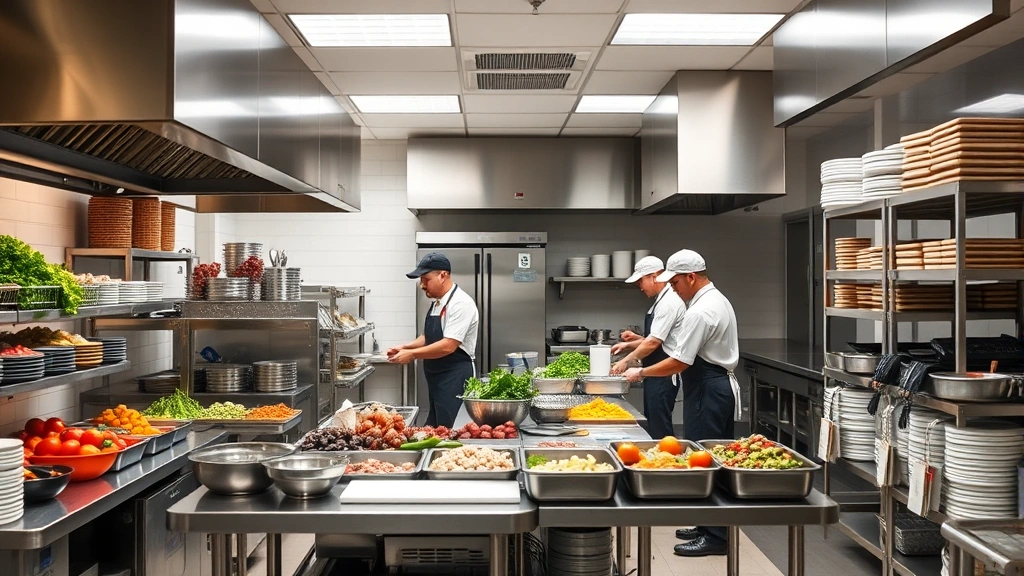
Understanding the Health Bar and Kitchen Market
The health bar market has experienced explosive growth over the past decade, driven by consumers’ increasing awareness of nutrition and wellness. These establishments go beyond traditional juice bars, offering protein bowls, smoothie blends, energy balls, and functional beverages designed to support specific health goals. Success in this space requires understanding your target demographic, market positioning, and competitive landscape.
Market research indicates that health-conscious consumers—particularly millennials and Gen Z—prioritize convenience without compromising nutrition. They’re willing to pay premium prices for high-quality ingredients, transparent sourcing, and products aligned with their values. This creates significant margin opportunities for well-positioned kitchen businesses. Understanding your Wealthysphere Blog resources on market analysis can help you identify profitable niches.
Location strategy plays a critical role in kitchen business success. High-traffic areas near gyms, corporate offices, universities, and wellness centers provide consistent customer bases. However, foot traffic must be balanced against rental costs and operational feasibility. Many successful operators have discovered that secondary locations with lower overhead can be equally profitable when combined with strong digital marketing and delivery capabilities.
Competitive analysis should focus on identifying white space opportunities rather than directly competing on price. Whether you specialize in vegan options, keto-friendly products, functional medicine alignment, or athlete-focused nutrition, differentiation protects margins and builds loyal customer bases. The most successful health bars position themselves as lifestyle partners rather than mere food vendors.

Financial Foundation and Startup Costs
Building a financially sustainable kitchen business begins with realistic cost projections and robust financial planning. Initial startup costs for a health bar typically range from $50,000 to $250,000, depending on location, equipment, and scale. Breaking this down: commercial kitchen equipment ($15,000-$50,000), build-out and design ($10,000-$40,000), permits and licensing ($5,000-$15,000), initial inventory ($5,000-$10,000), and working capital reserves ($15,000-$50,000).
Beyond startup costs, understanding your unit economics is essential. Calculate your cost of goods sold (COGS) carefully—successful food businesses typically maintain COGS between 25-35%. This means if your average transaction is $12, your ingredient costs should not exceed $3-$4.20. Labor costs typically represent 25-35% of revenue for small operations, with rent consuming 8-12% of gross sales. These ratios determine profitability at different revenue levels.
Cash flow management presents a critical challenge for kitchen businesses. Unlike product-based businesses, food operations require frequent inventory replenishment with relatively short shelf lives. Establishing relationships with reliable suppliers who offer favorable payment terms (net-30 or net-60) provides necessary cash flow flexibility. Many successful operators negotiate wholesale pricing by committing to minimum weekly purchases, which also ensures consistent product quality.
Securing adequate funding requires presenting compelling financial projections to lenders or investors. Develop conservative revenue models based on realistic transaction volumes. A health bar operating 6 days per week with 200 daily transactions at an average $12 ticket generates approximately $748,800 in annual revenue. After accounting for COGS (30%), labor (30%), rent (10%), utilities (5%), and other operating expenses (10%), net profit margins of 15% are achievable—translating to approximately $112,320 in annual profit.
Consider exploring SBA loan programs, which offer favorable terms for food service businesses with established financial plans. Additionally, building relationships with local banks and credit unions can provide access to working capital lines of credit essential for managing seasonal fluctuations and inventory management.
Menu Development and Product Strategy
Your menu represents your primary value proposition and directly impacts profitability. Expert-approved menu strategies focus on limited selection, high-volume production, and strategic pricing. Rather than offering 50 variations, successful health bars typically feature 8-12 core products that can be produced efficiently while allowing for seasonal rotation and customer customization.
Product selection should align with your identified target market and competitive positioning. If targeting fitness enthusiasts, emphasize protein content and macronutrient balance. For busy professionals, highlight convenience and sustained energy. For health-conscious families, feature whole food ingredients and sugar-free options. This alignment ensures marketing efficiency and reduces waste from low-demand products.
Ingredient sourcing significantly impacts both profitability and brand positioning. Establishing relationships with local suppliers supports community connection while potentially reducing transportation costs. Organic and specialty ingredient sourcing commands premium pricing, allowing for superior margins when positioned correctly. However, ensure that ingredient premiums translate into perceivable customer value—paying 40% more for ingredients only justifies pricing increases if customers recognize and reward that quality difference.
Menu pricing strategy requires balancing perceived value, competitive positioning, and profitability targets. Premium positioning supports higher prices; a health bar positioned as luxury wellness can command $14-$16 for smoothie bowls, while value-focused competitors operate at $8-$10. Test pricing through customer surveys and monitoring demand elasticity. Small price increases often generate minimal demand reduction while significantly improving profitability.
Product development should be data-driven. Track which items generate highest profit margins, which drive repeat customers, and which create operational inefficiencies. Many successful operators discover that 20% of menu items generate 80% of profits. Focus on optimizing these core products rather than constantly expanding offerings. This focus reduces complexity, improves consistency, and enhances operational efficiency.
Exploring balanced nutrition principles helps ensure your products deliver genuine health benefits, supporting your brand promise and customer satisfaction. This knowledge also enables staff to provide credible nutritional guidance, enhancing customer trust and loyalty.
Operational Excellence Systems
Operational systems determine whether your kitchen business scales profitably or becomes a chaotic, unsustainable venture. Expert operators implement standardized processes for everything from ingredient preparation to customer service. This standardization enables consistent quality, reduces labor costs, and facilitates expansion.
Inventory management systems prevent the primary profit killer for food businesses: waste. Implement first-in-first-out (FIFO) protocols religiously. Use inventory management software to track ingredient usage, identify waste patterns, and optimize ordering. Many successful operators conduct weekly inventory audits, identifying which products are underperforming and adjusting purchasing accordingly.
Staffing and training profoundly impact both customer experience and profitability. Hire for attitude and culture fit, then train relentlessly on product knowledge, customer service, and operational procedures. Cross-training staff reduces scheduling bottlenecks and improves flexibility. Consider that employee retention directly impacts training costs and consistency. Investing in competitive compensation and positive work culture generates returns through reduced turnover and improved customer satisfaction.
Technology implementation streamlines operations and enhances customer experience. Point-of-sale systems provide real-time sales data and inventory integration. Online ordering and delivery platform integration expands your addressable market without proportional cost increases. Consider that technology investments should pay for themselves through efficiency gains or revenue expansion within 12-18 months.
Quality control systems maintain consistency and customer satisfaction. Implement daily checklists, taste testing protocols, and customer feedback mechanisms. Many successful operators schedule weekly team meetings to discuss feedback, identify improvement opportunities, and celebrate successes. This approach builds accountability while fostering team investment in quality.
Exploring health and wellness career opportunities within your growing business helps attract talented staff who are genuinely passionate about the mission, rather than viewing it as temporary employment.
Marketing and Customer Acquisition
Expert-approved marketing strategies for kitchen businesses focus on community building, strategic partnerships, and digital presence optimization. Rather than expensive traditional advertising, successful operators leverage cost-effective channels aligned with their target demographic.
Social media marketing represents the highest-ROI channel for health bar businesses. Instagram particularly showcases visual products, customer testimonials, and lifestyle content. Post consistently (3-5 times weekly), engage authentically with followers, and use location tags to capture local searches. User-generated content from customers provides authentic testimonials and social proof, significantly increasing conversion rates from profile visitors to customers.
Local partnerships create customer acquisition channels with minimal advertising costs. Collaborate with nearby gyms, yoga studios, physical therapy clinics, and corporate offices. Offer introductory discounts to their members or employees, recognizing that acquisition costs lower when targeting warm audiences already interested in health and wellness. Many successful operators find that strategic partnerships generate 20-30% of their customer base.
Email marketing nurtures customer relationships and drives repeat purchases. Collect email addresses through loyalty programs or online ordering. Send weekly emails featuring new products, seasonal specials, nutritional tips, and exclusive discounts. This consistent touchpoint keeps your brand top-of-mind and encourages repeat visits—customer lifetime value increases dramatically when repeat purchase frequency improves.
Loyalty programs incentivize repeat purchases while providing valuable customer data. Digital punch cards or app-based programs track purchasing patterns, enabling personalized recommendations and targeted promotions. Consider that acquiring a new customer costs 5-25 times more than retaining an existing customer. Loyalty programs that increase repeat visit frequency from monthly to weekly generate extraordinary returns.
Community involvement builds brand affinity and generates organic word-of-mouth marketing. Sponsor local 5K races, donate products to community events, or host wellness workshops. These activities position your business as a community partner rather than a mere commercial entity, creating emotional connections that transcend price-based competition.
Consulting with Forbes Small Business Marketing resources provides additional frameworks for developing comprehensive digital strategies tailored to your specific market and customer demographics.
Scaling Your Kitchen Business
Sustainable scaling requires systematizing what made your initial location successful, then replicating those systems in new locations. Before expanding, ensure your first location operates profitably with documented, transferable processes. Many entrepreneurs prematurely expand before achieving operational excellence, spreading their attention too thin and destroying profitability in the process.
Multi-location expansion strategies vary significantly. Some operators develop ghost kitchens that supply delivery platforms exclusively, minimizing overhead while reaching broader geographic areas. Others establish franchise models, leveraging franchisee capital and entrepreneurial energy. Still others develop packaged product lines sold through retail channels, creating revenue streams independent of physical locations.
Financial requirements for expansion are substantial. Opening a second location typically requires 60-75% of initial startup costs, as you’ll have refined your systems and potentially secured better supplier relationships. However, you’ll also face management complexity, requiring either hiring experienced managers or splitting your time across locations. Many successful multi-location operators establish clear accountability systems and performance metrics, managing locations semi-autonomously.
Exploring health information management roles can help you build data systems and analytical capabilities necessary for managing multiple locations effectively.
Franchise expansion offers capital-efficient growth but requires significantly different expertise. Franchisors must develop comprehensive operating manuals, training systems, and support infrastructure. Legal and regulatory requirements are substantial, typically requiring $30,000-$50,000 in franchise documentation development. However, successful franchise systems generate recurring revenue through franchise fees and royalties, often exceeding single-location profitability.
Supply chain optimization becomes increasingly important as you scale. Negotiating volume discounts with suppliers, potentially developing private label products, and optimizing distribution logistics all improve profitability. Many multi-location operators discover that 2-3% of revenue improvements through supply chain optimization exceed 10% revenue growth in terms of bottom-line impact.
Technology infrastructure scales with your business. Point-of-sale systems should integrate across locations, providing real-time visibility into performance. Accounting software should automate financial reporting and profitability analysis by location. Customer relationship management systems should track loyalty program participation and customer lifetime value across all locations.
Exploring mental health and wellness career opportunities reminds us that scaling businesses requires managing team stress and culture as growth accelerates, maintaining the values that made your business successful.
Exit strategies deserve consideration from inception. Building a systematized, profitable business increases valuation and attractiveness to potential acquirers. Multi-location businesses with proven systems, strong customer loyalty, and consistent profitability command premium valuations. Understanding that your ultimate goal may be acquisition, strategic partnership, or franchising influences operational decisions throughout your business’s lifecycle.
Consider consulting Investopedia’s business valuation resources to understand how operational decisions impact your business’s ultimate value and exit potential.
FAQ
What are the most profitable menu items for health bars?
Protein smoothie bowls, açai bowls with premium toppings, and cold-pressed juices typically generate highest margins. These items allow for significant ingredient markup while delivering perceived premium value. Specialty functional beverages—incorporating adaptogens, collagen, or performance-enhancing ingredients—command even higher prices with similar production costs, creating superior profit margins.
How long does it typically take for a health bar to become profitable?
Well-executed health bars typically achieve profitability within 12-18 months, though this varies based on location, initial capital, and operational efficiency. Locations with strong foot traffic and effective marketing may achieve profitability within 6-9 months, while secondary locations may require 18-24 months. The key determinant is achieving sufficient transaction volume relative to fixed costs.
Should I start with multiple locations or focus on perfecting one?
Expert consensus strongly recommends perfecting a single location before expanding. Multi-location expansion amplifies management complexity and requires systematized operations. Expanding prematurely often destroys profitability in both locations. Establish documented processes, achieve consistent profitability, and develop experienced management before considering expansion.
What’s the best way to manage inventory waste in a kitchen business?
Implement FIFO protocols, conduct weekly inventory audits, use inventory management software, and analyze waste patterns. Adjust purchasing based on demand data, develop creative uses for excess inventory (employee meals, special promotions), and build relationships with suppliers for flexible ordering. Many operators discover that 10-15% waste reduction directly translates to 5-10% profit margin improvement.
How important is location for health bar success?
Location significantly impacts success, but strong operations and marketing can overcome moderate location disadvantages. High-traffic areas near gyms and corporate offices provide advantages, but secondary locations with lower rent can be equally profitable with superior operational execution and digital marketing. Location determines your realistic customer acquisition costs and baseline transaction volume potential.
Can I run a successful kitchen business from a commercial shared kitchen?
Yes, many successful operators use commercial shared kitchens, particularly for meal prep services or packaged product development. This model minimizes overhead while maintaining food safety compliance. However, shared kitchens typically charge hourly rental fees or percentage-of-revenue arrangements, which must be factored into your unit economics. This model works best for businesses without significant foot traffic requirements.


